Birefringence Explained: How Light Changes Direction in Anisotropic Materials

Birefringence Explained: How Light Changes Direction in Anisotropic Materials

Introduction to Birefringence

Birefringence is a fascinating optical phenomenon where a material exhibits different refractive indices in different directions. This effect, also known as double refraction, occurs due to the anisotropic nature of certain crystals and biological structures.

Understanding birefringence is crucial in fields like optics, material science, biomedical imaging, and telecommunications. This blog explores the principles, applications, and scientific advancements related to birefringence.

Understanding the Science Behind Birefringence

1. What Causes Birefringence?

Birefringence occurs in materials where the atomic structure leads to an orientation-dependent interaction with light. Common causes include:

  • Crystal Anisotropy: Crystals like calcite and quartz have atomic arrangements that cause light to split into two orthogonal polarization components.
  • Mechanical Stress: Applying stress to glass or polymers can induce temporary birefringence, known as stress birefringence.
  • Biological Structures: Muscle fibers, collagen, and certain cell walls naturally exhibit birefringence due to their molecular alignment.

2. Types of Birefringence

  • Intrinsic Birefringence: Arises due to the inherent crystal structure, like in calcite.
  • Stress-Induced Birefringence: Found in optical fibers, where mechanical stress affects light propagation.
  • Form Birefringence: Results from microstructural patterns in materials such as layered composites and biological tissues.

3. Mathematical Representation of Birefringence

The birefringence (∆n) of a material is given by: Δn=neno where:

  • ne = Extraordinary refractive index
  • no = Ordinary refractive index

This difference determines how much the light waves separate inside the material.

Applications of Birefringence

1. Optical Devices and Polarization Control

  • Waveplates (Retarders): Convert linearly polarized light into circularly polarized light.
  • Liquid Crystal Displays (LCDs): Use birefringence in liquid crystals to control light transmission.
  • Optical Fibers: Birefringence affects signal polarization, making it a critical factor in fiber optic communication.

2. Biomedical Imaging and Diagnostics

  • Polarized Light Microscopy: Used in histology and pathology to analyze birefringent tissues like collagen and amyloid plaques.
  • OCT (Optical Coherence Tomography): Birefringence-based OCT provides insights into retinal diseases and muscle structures.

3. Geology and Mineralogy

  • Petrographic Microscopy: Identifies minerals based on their birefringent properties.
  • Structural Analysis: Determines stress patterns in rocks and crystals.

4. Material Science and Engineering

  • Stress Analysis in Polymers and Glass: Engineers use polarized light to detect manufacturing defects.
  • Metamaterials and Photonic Crystals: Birefringence aids in designing materials with tailored optical properties.

Birefringence in Everyday Life

  • Sunglasses and Optical Filters: Polarized sunglasses utilize birefringence to reduce glare.
  • 3D Movies: Use birefringence-based polarization techniques to create depth perception.
  • CDs and DVDs: Data encoding is affected by birefringent interference patterns.

Recent Advances in Birefringence Research

  • Nanophotonic Devices: Researchers are designing ultra-thin birefringent films for enhanced optical computing.
  • Biomedical Innovations: Novel birefringence-based imaging techniques improve early disease detection.
  • Quantum Optics: Birefringent materials play a role in quantum communication and cryptography.

Conclusion

Birefringence is a cornerstone of modern optics, impacting fields ranging from telecommunications to medicine. With advancements in nanotechnology and material science, its applications continue to expand, shaping the future of photonics and imaging technologies.


Chandrayaan-5: India’s Next Giant Leap in Lunar Exploration

Chandrayaan-5: India’s Next Giant Leap in Lunar Exploration

Introduction

The Indian Space Research Organisation (ISRO) has officially received approval from the central government for Chandrayaan-5, marking another ambitious step in India’s space exploration journey. The mission is set to carry a 250-kg lunar rover, making it one of the most advanced and high-tech lunar missions ever undertaken. This announcement comes after the remarkable success of Chandrayaan-3, which achieved a historic soft landing near the Moon's south pole.

As space enthusiasts around the world eagerly anticipate this mission, let’s dive deep into what Chandrayaan-5 aims to achieve, how it differs from its predecessors, and why it is a game-changer for India’s space program.

The Evolution of India’s Lunar Missions

India’s space journey has been nothing short of spectacular. From launching Chandrayaan-1 in 2008, which discovered water molecules on the Moon, to the flawless landing of Chandrayaan-3 in 2023, ISRO has consistently pushed the boundaries of innovation.

Chandrayaan-1 (2008)

  • First Indian lunar probe.
  • Discovered water molecules on the Moon.
  • Used an impact probe to confirm the presence of ice.

Chandrayaan-2 (2019)

  • Aimed for a soft landing on the Moon.
  • Orbiter successfully relayed crucial data.
  • Vikram lander crashed during descent but provided valuable insights.

Chandrayaan-3 (2023)

  • Achieved a historic soft landing near the Moon’s south pole.
  • Rover Pragyan explored the surface, analyzing soil and mineral composition.
  • Proved India’s technological prowess in space exploration.

Chandrayaan-4 (Concept Mission)

  • Proposed to focus on a human lunar lander module.
  • Possible collaboration with international space agencies.

Chandrayaan-5 (Upcoming)

  • Approved by the Government of India.
  • Will feature a 250-kg rover.
  • Aims to carry out advanced research and analysis on the Moon.
  • Expected to be a stepping stone toward India’s first human Moon mission.

Chandrayaan-5: Mission Objectives

ISRO’s latest lunar mission is not just about exploration; it is a technological advancement that will place India at the forefront of deep-space exploration. Some key objectives of Chandrayaan-5 include:

1. Advanced Lunar Rover

  • The 250-kg rover will be equipped with state-of-the-art scientific instruments to study the lunar surface in detail.
  • It will carry AI-powered sensors for autonomous navigation.
  • Expected to travel longer distances than previous rovers.

2. Mineral and Water Resource Mapping

  • Advanced spectrometers will analyze lunar soil composition.
  • Will search for water ice deposits in the permanently shadowed regions.
  • Key for future human Moon bases and deep-space missions.

3. Testing ISRO’s Next-Gen Lunar Tech

  • Upgraded propulsion system for a precise landing.
  • Use of new AI algorithms to ensure a soft landing in a challenging terrain.
  • First Indian rover to be capable of self-repair in case of minor malfunctions.

4. Studying Lunar Seismic Activity

  • Will deploy seismometers to understand Moonquakes.
  • Helps scientists understand the Moon’s geological evolution.
  • Crucial for designing future lunar habitation modules.

5. Technology Demonstration for Future Space Missions

  • Develops and tests new generation solar panels for long-term Moon missions.
  • Could serve as a foundation for future lunar resource utilization.
  • Prepares ISRO for interplanetary missions to Mars and beyond.

How Chandrayaan-5 Differs from Chandrayaan-3

With every new mission, ISRO introduces cutting-edge innovations that enhance efficiency and scientific exploration. Here’s how Chandrayaan-5 stands apart from its predecessors:

Feature Chandrayaan-3 Chandrayaan-5
Rover Weight ~26 kg 250 kg
Landing Site South Pole TBD (Larger area coverage)
AI Integration Basic Advanced AI-based Navigation
Energy Source Solar Panels Hybrid (Solar + RTG backup)
Scientific Payloads Soil Analysis Water, Seismic & Geology Study
Mission Goal Technology Demonstration Resource Mapping & Future Lunar Habitat

The Roadmap to Launch

1. Government Approval and Budget Allocation

With approval from the Government of India, funding has been allocated for the mission, and scientists are working on finalizing mission design and launch timelines.

2. Development & Testing Phase

  • Rover and lander modules will undergo rigorous space simulation tests.
  • Thermal and vacuum tests will ensure durability in extreme lunar conditions.
  • New navigation and landing algorithms will be tested in artificial lunar terrain.

3. Integration & Final Launch Preparations

  • Once testing is complete, the Chandrayaan-5 spacecraft will be integrated with a powerful launch vehicle (likely GSLV Mk III or an upgraded version).
  • A rigorous countdown and system check will be conducted before liftoff.

Global Impact & Future Prospects

Chandrayaan-5 will not only bolster India’s space exploration reputation but also pave the way for:

  • Collaboration with NASA and ESA for human Moon missions.
  • A potential Moon base using lunar resources.
  • Strengthening India’s position in the global space economy.

Conclusion

With Chandrayaan-5, India is once again pushing the boundaries of space technology. This next-generation lunar mission is not just about exploration but also about establishing India as a key player in interplanetary exploration and resource utilization.

As ISRO continues its relentless pursuit of excellence, Chandrayaan-5 promises to be a historic milestone, leading towards an era where India could play a crucial role in building sustainable lunar habitats and deep-space missions.


India's Bioeconomy: The Future of Sustainable Growth

India's Bioeconomy: The Future of Sustainable Growth

Introduction

India's bioeconomy is emerging as a key driver of sustainable economic growth, leveraging biotechnology, biofuels, biopharmaceuticals, and bio-based products. As one of the fastest-growing bioeconomies globally, India is making significant strides in innovation, research, and industrial applications. The Indian government, academia, and private sector are collaboratively working towards boosting biotechnology and sustainable bio-based solutions to address global challenges like climate change, healthcare, and food security.

What is Bioeconomy?

The bioeconomy refers to economic activities that utilize biological resources, including biomass, microorganisms, and biotechnology, to develop sustainable products, services, and industrial processes. It spans multiple industries such as agriculture, healthcare, bioenergy, and industrial biotechnology.

India's Bioeconomy Growth and Market Size

India's bioeconomy has witnessed exponential growth, reaching a valuation of over $80 billion in 2023 and is projected to cross $150 billion by 2025. The sector is fueled by advancements in biotech startups, bio-manufacturing, and bioinformatics. Government initiatives like Startup India, Make in India, and the National Biotechnology Development Strategy are propelling innovation and investments.

Key Sectors of India's Bioeconomy

1. Biopharmaceuticals

India is a global leader in generic drug manufacturing, vaccines, and biosimilars. With over 60% of global vaccine production, India plays a crucial role in healthcare bioeconomy. Companies like Serum Institute of India, Bharat Biotech, and Biocon are pioneering breakthroughs in biopharmaceuticals.

2. Agricultural Biotechnology

Biotech-driven agriculture is enhancing productivity, pest resistance, and climate resilience. Genetically modified (GM) crops, biofertilizers, and biopesticides are transforming traditional farming practices. Bt Cotton, the first GM crop approved in India, has significantly boosted yields.

3. Biofuels and Bioenergy

India is investing heavily in ethanol, biodiesel, and biogas production to reduce fossil fuel dependency. The National Bio-Energy Mission and Ethanol Blending Program aim to achieve a 20% ethanol blend by 2025, promoting a circular bioeconomy.

4. Industrial Biotechnology

Enzymes, bio-plastics, and fermentation-based industrial processes are reducing carbon footprints in manufacturing. Companies are developing sustainable biodegradable plastics and bio-based chemicals to replace petrochemical-based products.

5. Waste-to-Value Technologies

Waste-to-bioenergy solutions, including biomass power, composting, and wastewater treatment, are being integrated into India’s smart city projects. The Swachh Bharat Mission promotes bio-waste utilization for a cleaner and greener economy.

Government Initiatives Supporting Bioeconomy

  1. Biotechnology Industry Research Assistance Council (BIRAC) – Fostering innovation through funding and incubation support.
  2. National Biopharma Mission – Advancing India’s biopharmaceutical capabilities.
  3. DBT-ICGEB Centre for Advanced Bioenergy Research – Driving biofuel research.
  4. National Policy on Biofuels – Accelerating ethanol and biodiesel adoption.
  5. Biotech Parks and Incubators – Strengthening infrastructure for startups and R&D.

Role of Startups in India's Bioeconomy

India is home to over 5000 biotech startups, with a target of 10,000 startups by 2025. These startups are innovating in synthetic biology, personalized medicine, bioinformatics, and CRISPR-based gene editing.

Challenges in Bioeconomy Growth

Despite rapid progress, India’s bioeconomy faces challenges such as:

  • Regulatory Hurdles: Approval processes for biotech products remain complex.
  • Funding Constraints: Early-stage biotech startups struggle with capital access.
  • Infrastructure Gaps: Limited biomanufacturing and R&D facilities hinder scalability.
  • Public Awareness: Limited knowledge of bio-based alternatives affects market penetration.

Future Outlook of India’s Bioeconomy

India's bioeconomy is set to become a global powerhouse, with increasing investments in precision agriculture, regenerative medicine, and AI-driven bioinformatics. The government’s focus on a bio-circular economy, integrating waste management with sustainable production, will further drive growth.

Conclusion

India’s bioeconomy is at the forefront of sustainable innovation, shaping the future of biotechnology, healthcare, and renewable energy. With supportive policies, industry-academia collaboration, and a thriving startup ecosystem, India is poised to become a $300 billion bioeconomy by 2030. As bio-based solutions continue to evolve, they will play a critical role in India’s Atmanirbhar Bharat (self-reliant India) initiative, ensuring sustainable development and economic resilience.

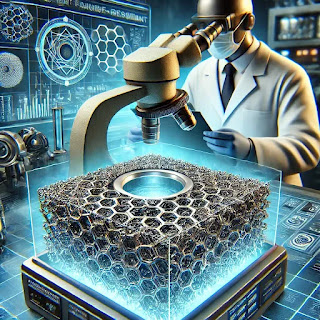
Researchers' Work Towards Better, Fatigue-Resistant Alloys

Researchers' Work Towards Better, Fatigue-Resistant Alloys

Introduction

Fatigue failure is one of the most critical challenges in materials engineering, impacting industries such as aerospace, automotive, and structural engineering. To combat this, researchers are working on developing fatigue-resistant alloys that can withstand repeated stress cycles without compromising structural integrity.

This article explores the latest advancements in fatigue-resistant materials, the science behind fatigue failure, and how emerging technologies like machine learning, nanotechnology, and additive manufacturing are revolutionizing the field.


Understanding Fatigue Failure in Alloys

Fatigue failure occurs when a material experiences cyclic loading, leading to the gradual formation and propagation of cracks until the material ultimately breaks. The key factors affecting fatigue resistance include:

  • Stress amplitude and mean stress
  • Microstructural characteristics
  • Environmental conditions (e.g., temperature, corrosion)
  • Material composition and grain size

Traditionally, fatigue-resistant alloys have been developed through heat treatment, alloying, and surface modifications. However, modern research is pushing the boundaries by leveraging computational materials science and AI-driven material discovery.


Innovations in Fatigue-Resistant Alloys

1. High-Entropy Alloys (HEAs)

High-entropy alloys (HEAs) are a breakthrough in materials engineering. Unlike conventional alloys with a dominant base metal, HEAs consist of multiple principal elements, leading to:

  • Superior mechanical properties
  • High fatigue resistance due to atomic-level stress redistribution
  • Enhanced corrosion and wear resistance

Recent studies have shown that HEAs can exhibit ultra-high fatigue life, making them ideal for aerospace and biomedical applications.

2. Gradient Nanostructured Materials

Nanostructuring has proven to be a game-changer for fatigue-resistant alloys. By engineering materials with a gradient nanostructure, researchers have achieved:

  • Higher crack resistance
  • Strain hardening under cyclic loading
  • Self-healing properties at the atomic scale

3. Superalloys for Aerospace Applications

Superalloys, particularly nickel-based ones, are widely used in jet engines, gas turbines, and space applications due to their excellent high-temperature strength and fatigue resistance. The latest advancements involve:

  • Oxide dispersion strengthening (ODS) for microstructural stability
  • Additive manufacturing techniques for customized fatigue-resistant structures
  • AI-driven optimization for alloy composition

4. Titanium and Magnesium-Based Alloys

Titanium and magnesium alloys are preferred for lightweight applications, such as in electric vehicles (EVs) and biomedical implants. Innovations in this space focus on:

  • Beta-phase titanium alloys with superior fatigue performance
  • Magnesium alloys with improved grain refinement
  • Surface coating technologies to reduce fatigue crack initiation

Role of Emerging Technologies

Artificial Intelligence & Machine Learning

AI and ML are revolutionizing materials science by predicting alloy compositions that exhibit the best fatigue resistance. Through big data analysis, researchers can:

  • Identify fatigue hotspots in materials
  • Optimize microstructures for enhanced performance
  • Reduce trial-and-error in alloy development

Additive Manufacturing & 3D Printing

Metal 3D printing allows for the fabrication of custom fatigue-resistant alloys with tailored microstructures. This technology enables:

  • Layer-by-layer grain refinement
  • Optimization of porosity to enhance fatigue life
  • Cost-effective prototyping of fatigue-resistant components

Nanotechnology & Self-Healing Materials

Nanotechnology is helping develop self-healing alloys capable of closing microcracks before they propagate. This innovation enhances:

  • Longevity of structural materials
  • Reduction in maintenance costs
  • Improved safety in critical applications

Industrial and Commercial Applications

Fatigue-resistant alloys are crucial across multiple industries:

1. Aerospace & Aviation

  • Jet engine turbine blades
  • Structural components for spacecraft
  • Fatigue-resistant landing gear materials

2. Automotive & Electric Vehicles (EVs)

  • Lightweight fatigue-resistant chassis materials
  • High-performance alloy wheels
  • Improved battery casing alloys

3. Biomedical Engineering

  • Titanium implants for joint replacements
  • Stents with enhanced fatigue life
  • Corrosion-resistant prosthetics

4. Renewable Energy & Infrastructure

  • Wind turbine components
  • Structural bridges with fatigue-resistant steel
  • Offshore oil and gas pipelines

Future of Fatigue-Resistant Alloys

The future of fatigue-resistant materials is shaped by:

  • AI-driven alloy design reducing development time
  • Sustainable and recyclable alloys for eco-friendly manufacturing
  • Hybrid composite materials combining metals and ceramics
  • Advanced testing methods using real-time fatigue analysis

As industries shift towards sustainability and efficiency, the demand for high-performance fatigue-resistant alloys will continue to rise. The integration of AI, nanotechnology, and additive manufacturing will accelerate the discovery of next-generation materials, making engineering structures more durable and resilient.

Conclusion

The continuous innovation in fatigue-resistant alloys is driving advancements in aerospace, automotive, biomedical, and renewable energy sectors. Researchers are leveraging high-entropy alloys, nanotechnology, AI-driven material design, and 3D printing to develop next-generation materials capable of withstanding extreme conditions.

With the rapid pace of materials science and engineering breakthroughs, the future holds immense potential for alloys that are stronger, lighter, and more durable than ever before. Fatigue-resistant materials will be crucial in building safer, more efficient, and sustainable technological solutions for the world.


India to Launch Its First Indigenous Semiconductor Chip in 2025: A Game-Changer for the Tech Industry

India to Launch Its First Indigenous Semiconductor Chip in 2025: A Game-Changer for the Tech Industry

Introduction

India is set to achieve a historic milestone in 2025 with the launch of its first indigenous semiconductor chip. This development marks a significant leap in the country’s technological self-reliance and strengthens its position in the global semiconductor industry. The initiative aligns with the government’s "Make in India" and "Atmanirbhar Bharat" programs, aiming to reduce dependence on foreign semiconductor suppliers and boost domestic manufacturing.

The Importance of Semiconductors

Semiconductors are the backbone of modern technology, powering everything from smartphones and computers to automobiles and industrial automation systems. India’s heavy reliance on imports has exposed its economy to global supply chain disruptions. Developing an indigenous semiconductor ecosystem is crucial for national security, economic growth, and technological leadership.

Key Players in India's Semiconductor Initiative

Several public and private entities are collaborating to make India’s first semiconductor chip a reality. Some of the major contributors include:

  • ISRO and DRDO: These organizations have expertise in chip development for space and defense applications.
  • Tata Electronics and Vedanta-Foxconn JV: Private companies investing in semiconductor fabrication plants.
  • Government of India: The Ministry of Electronics and Information Technology (MeitY) is playing a crucial role through policy support and funding initiatives.
  • IITs and Research Institutions: Contributing to chip design and testing.

Semiconductor Manufacturing in India

The process of manufacturing a semiconductor chip involves several stages:

  1. Chip Design: Indian engineers and research institutions have been actively designing chips for global companies. With government support, these designs will now be produced domestically.
  2. Fabrication (Fab) Plants: A semiconductor fabrication plant, or fab, is where chips are manufactured. India is setting up state-of-the-art fabs with government incentives.
  3. Packaging and Testing: The final stage ensures that the chips meet global quality standards before reaching the market.

Advantages of an Indigenous Semiconductor Chip

1. Reduced Dependence on Imports

Currently, India imports nearly all of its semiconductor requirements, mainly from Taiwan, China, and the U.S. A domestic chip industry will help cut reliance on foreign suppliers.

2. Boost to ‘Make in India’

Having an indigenous chip will significantly benefit India’s electronic manufacturing industry, providing locally-made processors for gadgets, defense, and automotive sectors.

3. Job Creation and Economic Growth

A thriving semiconductor ecosystem will generate millions of direct and indirect job opportunities, boosting India’s economy.

4. Enhancing National Security

Domestically manufactured semiconductors will reduce risks related to cyber threats, ensuring data security and reliability in defense applications.

5. Technological Leadership

India’s entry into the semiconductor manufacturing sector will position it among the top global players, attracting more investments in R&D and innovation.

Challenges and Roadblocks

Despite the excitement around this development, India faces several challenges:

  • High Initial Investment: Setting up fabs requires billions of dollars in infrastructure, technology, and expertise.
  • Skilled Workforce: The semiconductor industry demands highly skilled engineers and technicians.
  • Global Competition: India will need to compete with established semiconductor giants like Taiwan (TSMC), South Korea (Samsung), and the U.S. (Intel, NVIDIA).

Government Policies and Support

The Indian government has introduced several initiatives to boost semiconductor manufacturing:

  • Semiconductor Mission: A $10 billion incentive program to attract global and domestic players.
  • PLI Scheme (Production-Linked Incentive): Encouraging investments in semiconductor production.
  • Infrastructure Development: Building semiconductor fabs in Gujarat, Karnataka, and Tamil Nadu.

Future Prospects

India’s semiconductor industry is expected to witness rapid growth in the coming decade. By 2030, India aims to be a major global hub for semiconductor design and manufacturing. With continued government support, strategic partnerships, and a growing talent pool, the future looks promising for India's semiconductor sector.

Conclusion

The launch of India’s first indigenous semiconductor chip is a transformative step towards technological independence. It will not only strengthen the country’s electronics and defense sectors but also establish India as a key player in the global semiconductor industry. With the right strategies and sustained efforts, India is well on its way to becoming a semiconductor powerhouse.


AI Will Soon Be Smarter Than Humans: The Dawn of Superintelligence

AI Will Soon Be Smarter Than Humans: The Dawn of Superintelligence

Introduction: The Rise of Artificial Superintelligence

Artificial Intelligence (AI) has been evolving at an unprecedented pace, transforming industries, automating tasks, and even outperforming humans in various domains. But the big question remains—will AI soon surpass human intelligence? As AI-driven models like OpenAI’s GPT series, Google’s DeepMind, and Tesla’s AI systems continue advancing, many experts believe we are on the brink of Artificial Superintelligence (ASI), a state where AI becomes smarter than humans in every possible way.

The Evolution of AI: From Narrow to Superintelligence

AI can be categorized into three major types:

  1. Narrow AI (ANI): Specialized in specific tasks like facial recognition, self-driving cars, and recommendation systems.
  2. General AI (AGI): Possesses human-like reasoning abilities and can perform any intellectual task a human can.
  3. Artificial Superintelligence (ASI): Surpasses human intelligence in all aspects, including creativity, problem-solving, and emotional intelligence.

Currently, AI is at the stage of Narrow AI, with researchers pushing the boundaries toward AGI. The development of ASI, however, is both a fascinating and concerning possibility.

Key Factors Driving AI’s Superiority Over Humans

  1. Exponential Growth in Computational Power

    • Quantum computing and neuromorphic chips are pushing AI beyond conventional silicon-based computing.
    • AI systems process data millions of times faster than the human brain.
  2. Data Processing & Learning Capabilities

    • AI can analyze vast amounts of data in real time, making decisions with incredible accuracy.
    • Machine learning models are improving through deep learning and reinforcement learning algorithms.
  3. Self-Learning and Adaptability

    • AI models are evolving without human intervention, continuously learning from new data.
    • AutoML (Automated Machine Learning) is making AI more autonomous.
  4. Superior Memory and Multi-Tasking Abilities

    • Unlike humans, AI doesn’t forget or experience cognitive fatigue.
    • It can execute multiple complex tasks simultaneously with 100% efficiency.
  5. AI's Role in Creative Fields

    • AI is now writing poetry, composing music, generating artwork, and even scripting movies.
    • Tools like DALL·E, MidJourney, and ChatGPT are redefining creativity.

Ethical and Existential Concerns: Is AI a Threat to Humanity?

While AI’s potential is enormous, it also brings major concerns:

  • Job Displacement: AI is automating millions of jobs, creating fears of unemployment.
  • Control Problem: Can AI surpass human control, leading to unintended consequences?
  • AI Bias and Ethics: AI models can develop biases, leading to ethical concerns in decision-making.
  • Existential Risks: Notable figures like Elon Musk, Stephen Hawking, and Nick Bostrom warn about AI surpassing human intelligence and becoming uncontrollable.

Real-World Applications of Superintelligent AI

  1. Healthcare & Drug Discovery

    • AI is accelerating medical research and developing new drugs at record speeds.
    • AI-powered diagnostics outperform human doctors in detecting diseases.
  2. Autonomous Systems

    • AI is improving self-driving cars, drones, and robotic assistants.
  3. Cybersecurity & Defense

    • AI-driven security systems predict and neutralize cyber threats before they occur.
  4. Financial Markets & Business Automation

    • AI-powered trading algorithms outperform human investors.
    • AI is optimizing supply chains, reducing inefficiencies, and increasing profits.

The Path to Artificial Superintelligence: How Close Are We?

  • Moore’s Law & Computational Advancements: Supercomputers are becoming exponentially powerful.
  • Breakthroughs in Neural Networks: AI is now capable of self-improvement, mimicking human thought processes.
  • Funding & Research: Tech giants like Google, Microsoft, and OpenAI are investing billions into AGI research.

Conclusion: The Future of AI & Humanity

The rise of AI to superintelligence is inevitable, but how we integrate it into society will determine whether it becomes a powerful ally or an existential threat. Ensuring ethical AI development, proper regulations, and human-AI collaboration will be critical in shaping a future where AI serves humanity rather than surpasses and controls it.

Redeeming India’s Nuclear Power Promise: A Clean Energy Imperative for 2047

Introduction: A Nuclear Vision for Viksit Bharat@2047 As India marches toward its ambitious goal of becoming a developed nation by 2047, en...